
Hampshire · Dorset · Sussex
Concrete Repairs
Spalling, cracking, and corroded reinforcement don't always mean a full rebuild. We diagnose the real extent of the damage, then repair what can be repaired — properly, and at a fraction of the cost of replacement.
Book a free survey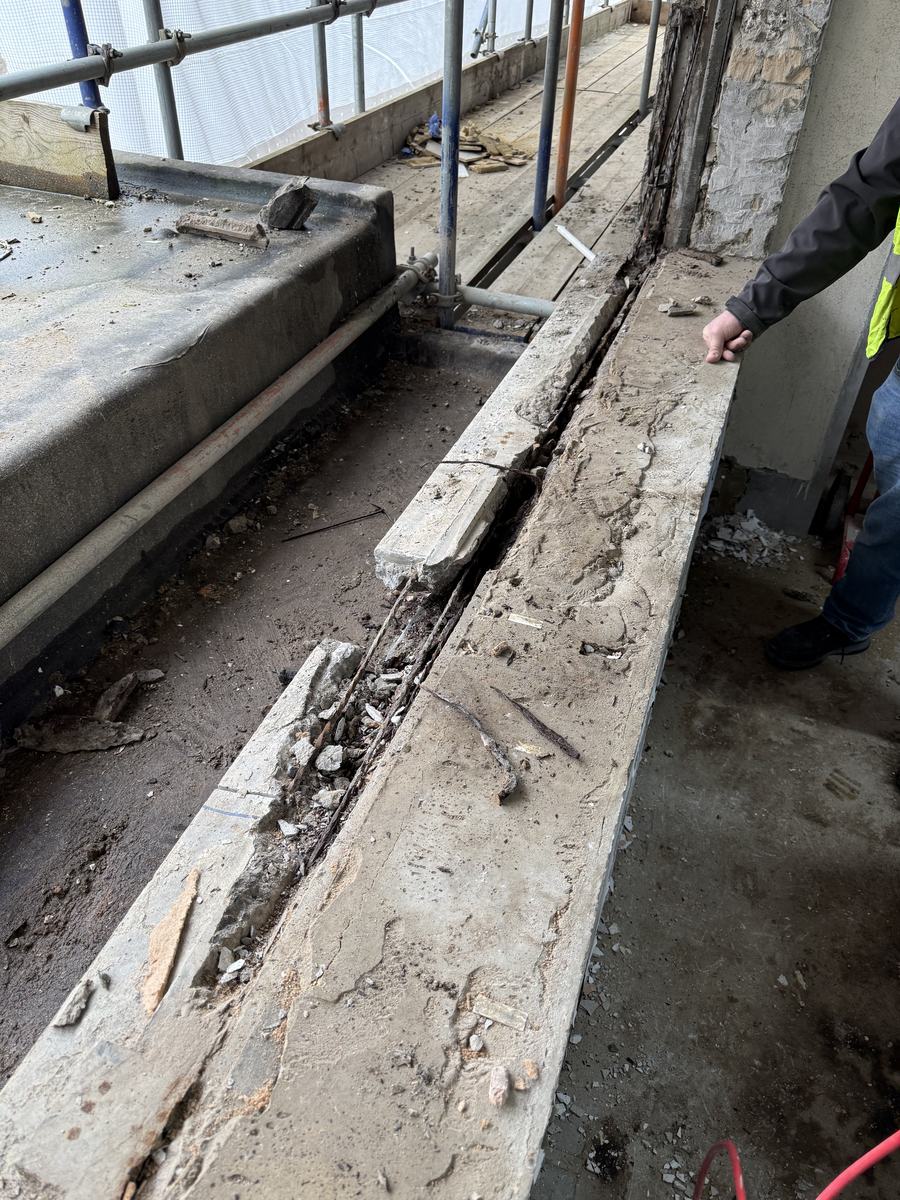
Signs you might need concrete repairs
- Spalling — concrete cracking and breaking away from the surface
- Rust staining bleeding through cracks or across the surface
- Exposed or visibly corroding reinforcement bar (rebar)
- Hairline cracks that are widening over time
- Delamination — the surface layer separating from the structure beneath
- Damage concentrated on an exposed edge (the arris) of a column, beam, or lintel
This kind of damage is sometimes called "concrete cancer" — the rebar inside corrodes, expands, and forces the surrounding concrete apart from the inside out. It can look worse than it actually is, and sometimes worse than it looks too. A proper inspection tells you which, before you spend money on the wrong fix.
What actually causes it? Almost always one of two things: carbonation, where airborne CO₂ gradually lowers the concrete's natural alkalinity until it stops protecting the steel inside, or chloride-induced corrosion, where salt — from coastal air or de-icing salt — penetrates the concrete and attacks the rebar directly. Coastal properties across Hampshire, Dorset, and Sussex see chloride-related spalling regularly, which is why correct diagnosis matters before any repair is specified.
How we fix it
Most concrete repairs combine more than one of these techniques, depending on the severity and cause of the damage.
Repair mortars
For minor cracks or surface spalling, a specialist repair mortar is used to rebuild the damaged section. These mortars are formulated to bond seamlessly with the existing concrete, restoring both strength and appearance without needing to remove sound material.
Reinforcement treatment and replacement
When rebar inside the concrete has corroded, the cause has to be addressed, not just the symptom. Lightly corroded steel is cleaned and treated with a corrosion-inhibiting primer before re-encasing. More significant corrosion may mean replacing sections of the reinforcement entirely before the repair mortar goes on — skipping this step is why some concrete repairs fail within a few years.
Resin injection
For deeper cracking that a surface mortar won't reach, high-strength resin is injected directly into the crack, bonding and sealing it from within. This is particularly effective for structural cracks rather than surface-level damage.
Arris (edge) repairs
Damage to an exposed edge — the corner of a column, beam, or lintel — needs extra care to rebuild the original profile and get a strong bond between old and new material. This sometimes requires formwork to hold the repair mortar in shape while it cures, which adds time but is essential for a repair that actually lasts.
Concrete repair cost
Cost varies hugely depending on the size and depth of the damage, the condition of the reinforcement, and site access — we'd rather give you an honest "it depends" than a number that doesn't hold up once we've actually seen the job. Here's what genuinely affects the price:
- Size and depth of the damaged area — small surface spalling is quick to repair; larger areas need more preparation and material
- Condition of the reinforcement steel — lightly corroded rebar can be cleaned and treated; significant corrosion means replacing sections, which adds complexity
- Cause of the corrosion — chloride-induced corrosion (common in coastal properties) is harder to fully resolve than carbonation, since salts already in the concrete can't be removed by repair alone
- Arris (edge) repairs — rebuilding an exposed corner profile can require formwork and extra time
- Access — ground-level repairs are straightforward; height or restricted access may need scaffolding or a mobile tower
Is it better to repair or replace? In most cases, repair is far more cost-effective than full replacement, particularly when the underlying structure is still sound. Replacement means breaking out large sections, installing new reinforcement, and pouring new concrete — disruptive and expensive compared with a targeted repair that restores both strength and appearance. Our repairs follow the principles of BS EN 1504, the standard covering concrete repair specification in the UK. Our site surveys are free, and if a repair won't genuinely solve the problem, we'll tell you that too.
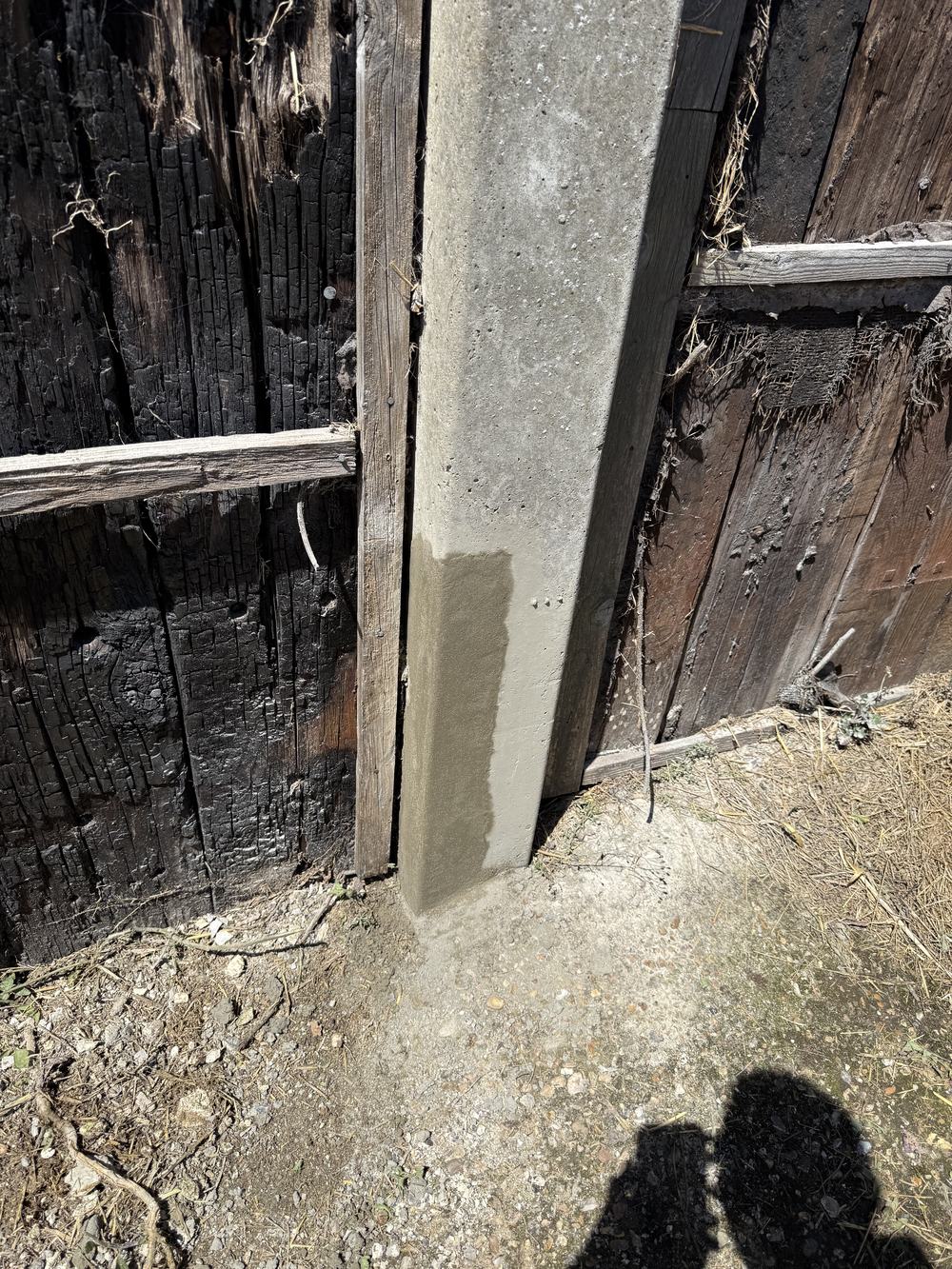
Denmead, Portsmouth area · recent project
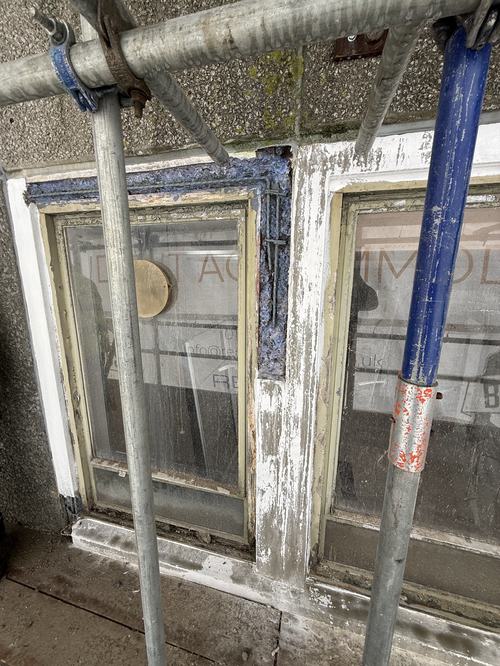
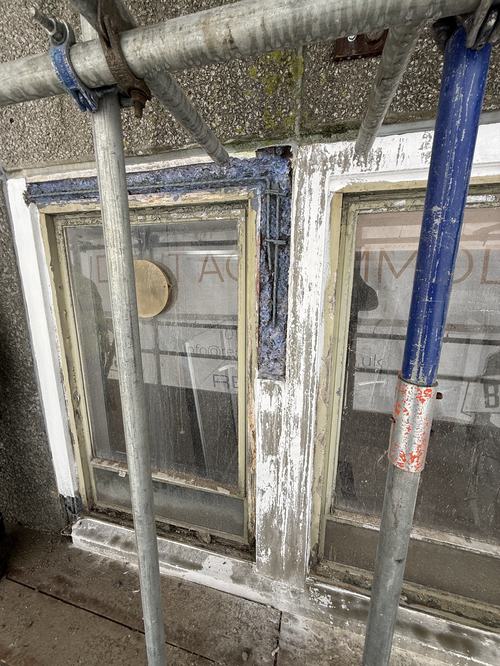
Spalling concrete columns, barn conversion
The problem: Several concrete columns on a barn were showing spalling, with the rusting rebar inside visibly pushing the concrete apart.
The cause: Corroding reinforcement, common in older agricultural concrete with limited cover over the steel.
The fix: Exposed rebar treated with Fosroc Nitoprime Zincrich primer, then rebuilt using Fosroc Renderoc structural repair mortar — the same proven system used across our concrete and lintel repair work. Completed over two days.
Common questions
What is spalling concrete?
Spalling, sometimes called concrete cancer, is when pieces of concrete crack and break away from the surface, usually because the steel reinforcement (rebar) inside has corroded and expanded, putting pressure on the surrounding concrete until it cracks and flakes off.
What causes concrete to spall?
Almost always carbonation or chloride-induced corrosion. Carbonation occurs when airborne CO₂ gradually lowers the concrete's alkalinity until it no longer protects the embedded steel. Chloride-induced corrosion happens when salt — from coastal air or de-icing salt — penetrates the concrete and attacks the rebar directly. Coastal properties are particularly prone to chloride-related spalling.
Is it better to repair or replace damaged concrete?
In most cases, repairing concrete is significantly more cost-effective than full replacement, especially when the underlying structure is still sound. Replacement involves breaking out large sections, installing new reinforcement, and pouring new concrete — far more disruptive and expensive than a targeted repair.
How much do concrete repairs cost?
Cost depends on the size and depth of the damaged area, the condition of the reinforcement steel, whether the repair falls on an exposed edge (arris), and site access. A free site survey gives an accurate, case-by-case quote.
Spotted spalling, cracking, or rust staining?
With over 30 years on the tools across Hampshire, Dorset, and Sussex, we know what it takes to put concrete right and keep it that way. Get in touch for a free inspection and some straight advice on the best way forward.
Book your free surveyYour data is always safe with us. We'll only contact you about your enquiry, and we never share details with third-party marketing organisations.
Areas we cover
Plus Southampton, Guildford, and the wider Hampshire, Dorset, and Sussex area.