
Hampshire · Dorset · Sussex
Crack Repairs & Crack Stitching
Cracking in walls, ceilings, or floors is rarely just cosmetic. We diagnose what's actually causing it, then fix it with crack stitching, masonry beaming, cem ties, or lateral restraints — whichever the cause actually calls for.
Book a free survey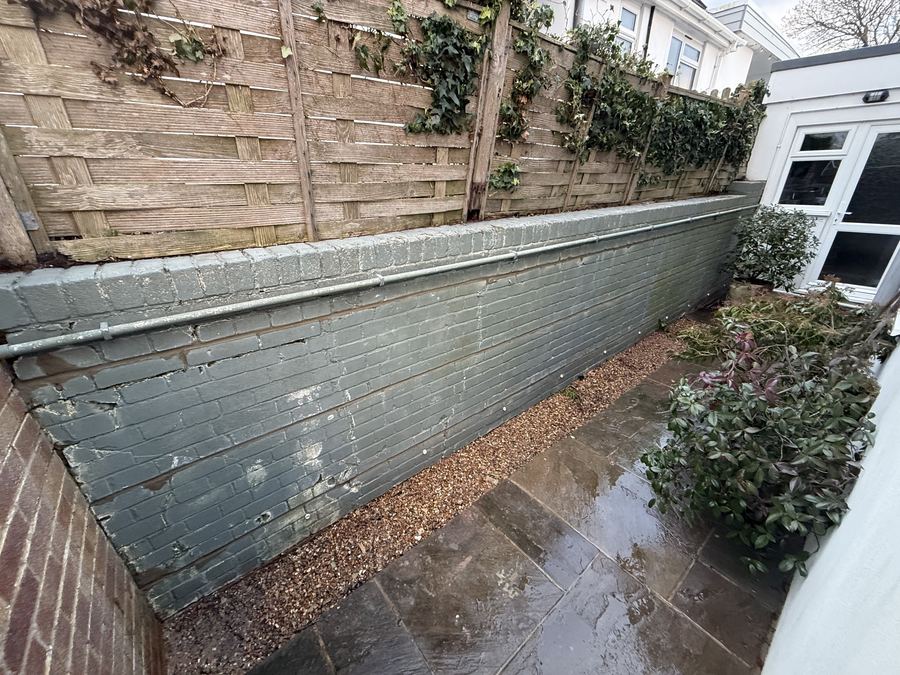
Signs you might need crack repairs
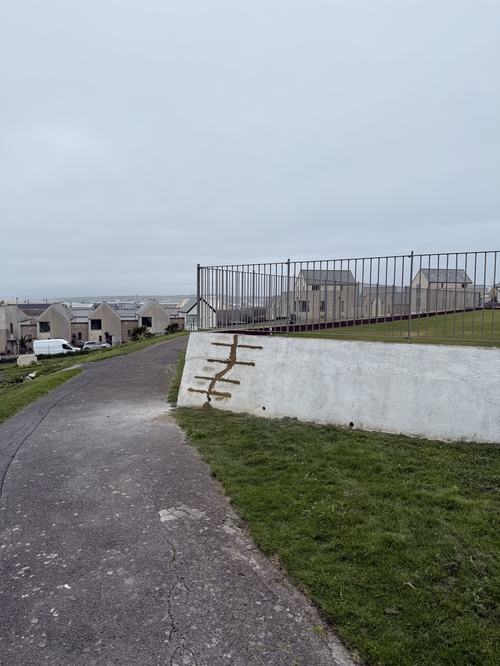
- Step cracking (a staircase pattern) in brickwork
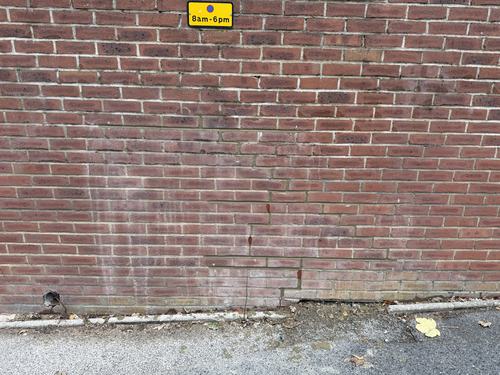
- Horizontal cracks running along mortar lines, often a sign of wall tie failure
- Vertical or diagonal cracks linked to settlement or subsidence
- Cracking around windows or doors, often caused by a failing lintel
- Cracks at internal corners, where standard stitching isn't always practical
- A bulging or bowing wall, where the masonry is visibly moving outward
If you recognise any of these, it's worth getting a proper diagnosis before assuming the worst — or before paying for a fix that doesn't actually address the cause.
How we fix it
"Crack repairs" covers several distinct techniques. We use whichever genuinely fits the cause and severity — not a one-size-fits-all approach.
Crack stitching (Helibar reinforcement)
The most common and versatile method. Stainless steel helical bars — often called Helibar, regardless of manufacturer — are bonded into cut mortar joints across the crack using resin or cementitious grout. This re-establishes the original structural bond of the wall. The bars are typically just 6mm in diameter, so once pointed over, the repair is barely visible. Each bar is installed to a minimum length of 100cm either side of the crack for proper anchorage.
Masonry beaming
Used for larger or more severe cracking — historic subsidence, failed arches, or where a section of wall needs significant reinforcement rather than a single stitched crack. Helical bars are installed in a double-layered formation along the bed joints, creating a reinforced beam within the existing masonry that redistributes the load evenly. This can also be used as an alternative to full lintel replacement, where the lintel itself is structurally sound but the masonry above it needs support.
Cem ties
Used specifically at corners, where standard horizontal crack stitching isn't practical. A tie is drilled through one face of the wall, across the crack, extending roughly 500mm beyond it, then bonded in place with resin or cementitious grout. This restores the structural connection at the junction.
Lateral restraints
Used where a wall is bulging or bowing, often because internal floor or roof timbers have pulled away from the external wall. Stainless steel ties are installed to tie the wall back to the floor joists or roof structure, stopping further outward movement. Often used alongside crack stitching rather than as a standalone fix.
Wall tie failure — a common underlying cause
A significant proportion of the cracking we're called out to investigate turns out to be caused by failed or corroding wall ties, not the masonry itself. If a survey identifies this as the cause, the crack repair alone won't stop it recurring — the wall ties need replacing too. That's not something we carry out directly; it's the specialism of our sister company, 1st Master Wall Ties, who are Helifix Approved and members of the Wall Tie Installers Federation. If your survey points that way, we'll tell you honestly and put you straight in touch with them.
Crack stitching cost
Pricing is generally calculated per bar, typically £60–£120 per bar depending on the job. Because every property and every crack is different, an accurate price is only really possible after an on-site assessment — but here's what actually moves the number:
- Extent of cracking — longer or multiple cracks need more stitching points
- Cause of movement — subsidence or wall tie failure may need additional investigation or stabilisation first
- Property type and materials — older or irregular masonry can take more specialist work
- Access — ground-level work is straightforward; scaffolding for upper floors adds cost
- Additional repairs — repointing or brick replacement alongside stitching, if the masonry's been damaged
Crack stitching is generally one of the more cost-effective structural repairs, since it strengthens the existing masonry rather than requiring a partial rebuild. For most properties, it's the practical route to a long-term fix rather than a disruptive, more expensive one further down the line. A site survey is the only reliable way to get an accurate number — and ours are free.
Southampton · recent project
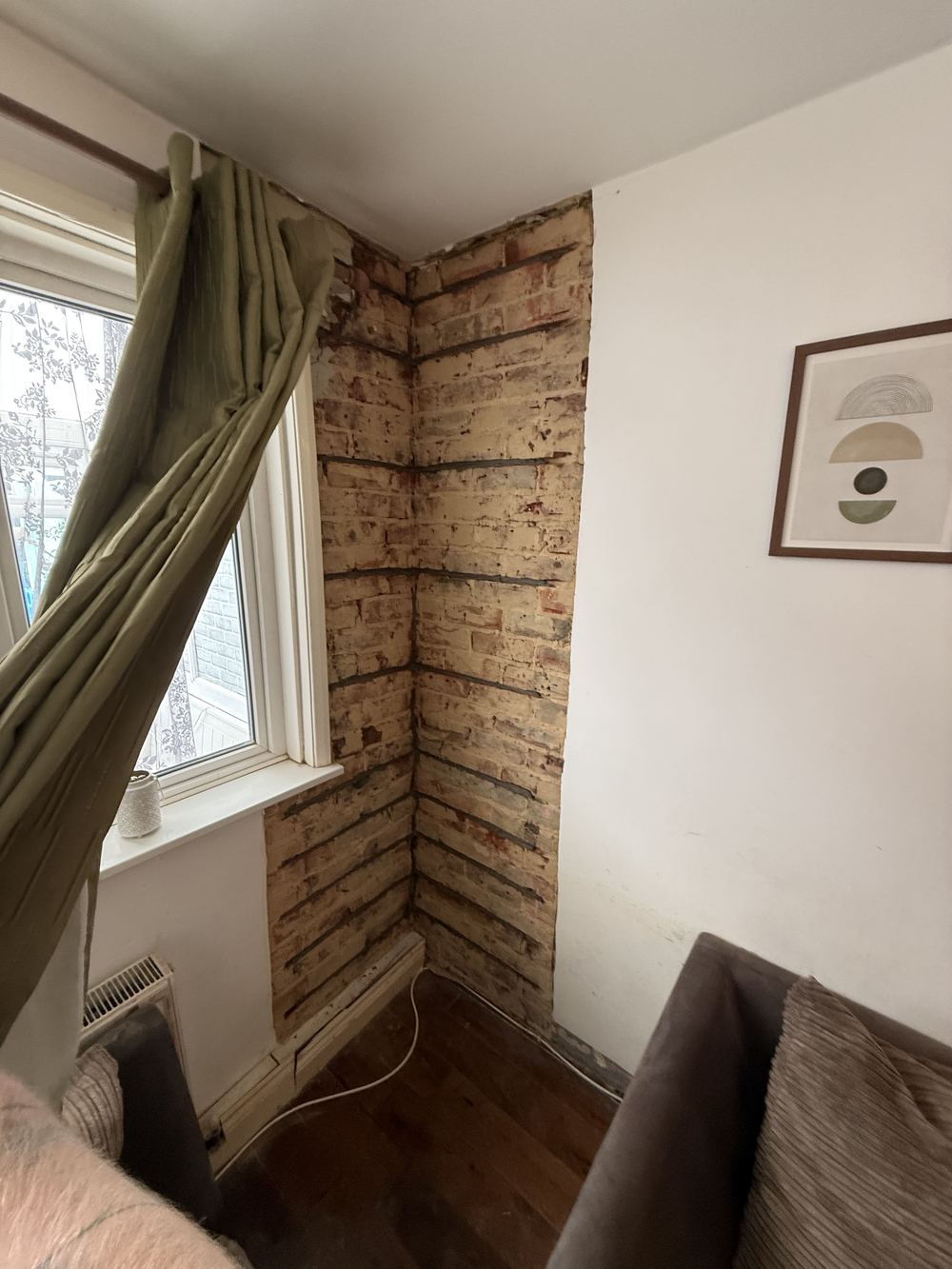
Corner crack, tenanted property
The problem: A vertical crack had opened up along the internal corner of a room in a tenanted property.
The cause: Diagnosed by a structural engineer as requiring helical bar reinforcement to restore the structural connection at the corner.
The fix: Helibar wrapped around the corner and resin-bonded, reinstating the strength of the junction. Plaster and decoration were completed separately by the landlord's own contractor.
Common questions
What is crack stitching?
Crack stitching is a structural repair technique that uses stainless steel helical bars, bonded into cut mortar joints with resin or cementitious grout, to reconnect and reinforce cracked masonry. It restores the wall's original strength without removing or rebuilding the affected brickwork.
Is crack stitching the same as a Helifix repair?
Helifix is a brand name for one manufacturer's helical bar system. Crack stitching is the generic term for the technique itself, regardless of which manufacturer's bars are used — people often search for both terms interchangeably.
Can crack stitching fix a bulging or bowing wall?
On its own, crack stitching reconnects cracked masonry but doesn't correct bulging. For bulging or bowing walls, lateral restraints are normally used alongside or instead of crack stitching, tying the wall back to floor or roof timbers to stop further movement.
How much does crack stitching cost?
Pricing is generally calculated per bar, typically £60–£120 depending on access, crack severity, and property type. A free site survey gives you an accurate, fixed-price quote.
Noticed a crack that's worrying you?
With over 30 years working on crack repairs across Hampshire, Dorset, and Sussex, we've seen firsthand how important it is to tackle the real cause, not just the visible damage. Whether it's minor or severe, get in touch for a free inspection — done properly, it can save you time and money down the line.
Book your free surveyYour data is always safe with us. We'll only contact you about your enquiry, and we never share details with third-party marketing organisations.